Energy security is becoming less about producing more energy and more about knowing where that energy—and the technologies behind it—will come from when markets are disrupted.
That was the broader message from the EU-Canada Energy Security Business Roundtable held in Montreal alongside the International Energy Agency’s Energy Efficiency Conference. While the meeting produced few headline announcements, it reflected a noticeable shift in how governments are approaching long-term energy resilience.
For both the European Union and Canada, the focus is no longer limited to securing fuel supplies. It now extends to building reliable trade relationships, strengthening critical supply chains and creating the infrastructure needed to support an increasingly electrified energy system.
Energy Partnerships Are Becoming Strategic Assets
Recent years have exposed how quickly energy markets can be disrupted by geopolitical tensions, trade restrictions and supply chain bottlenecks.
As a result, governments are placing greater value on partnerships with politically stable allies that can provide dependable access to energy, technology and investment.
The discussions in Montreal reflected this changing mindset. Government officials, utilities and industry leaders explored opportunities to deepen cooperation across LNG, electricity infrastructure, clean energy technologies and private-sector investment.
Rather than responding to a single crisis, the objective is to build a more resilient energy system that can withstand future disruptions.
Energy Security Now Includes Supply Chains
Reliable energy systems depend on far more than access to fuel.
Electricity grids, transmission equipment, critical minerals, industrial components and digital infrastructure have all become essential parts of national energy security strategies. Recent disruptions have shown that vulnerabilities anywhere along the value chain can affect the reliability and affordability of energy.
LNG Remains an Important Part of Europe’s Energy Strategy
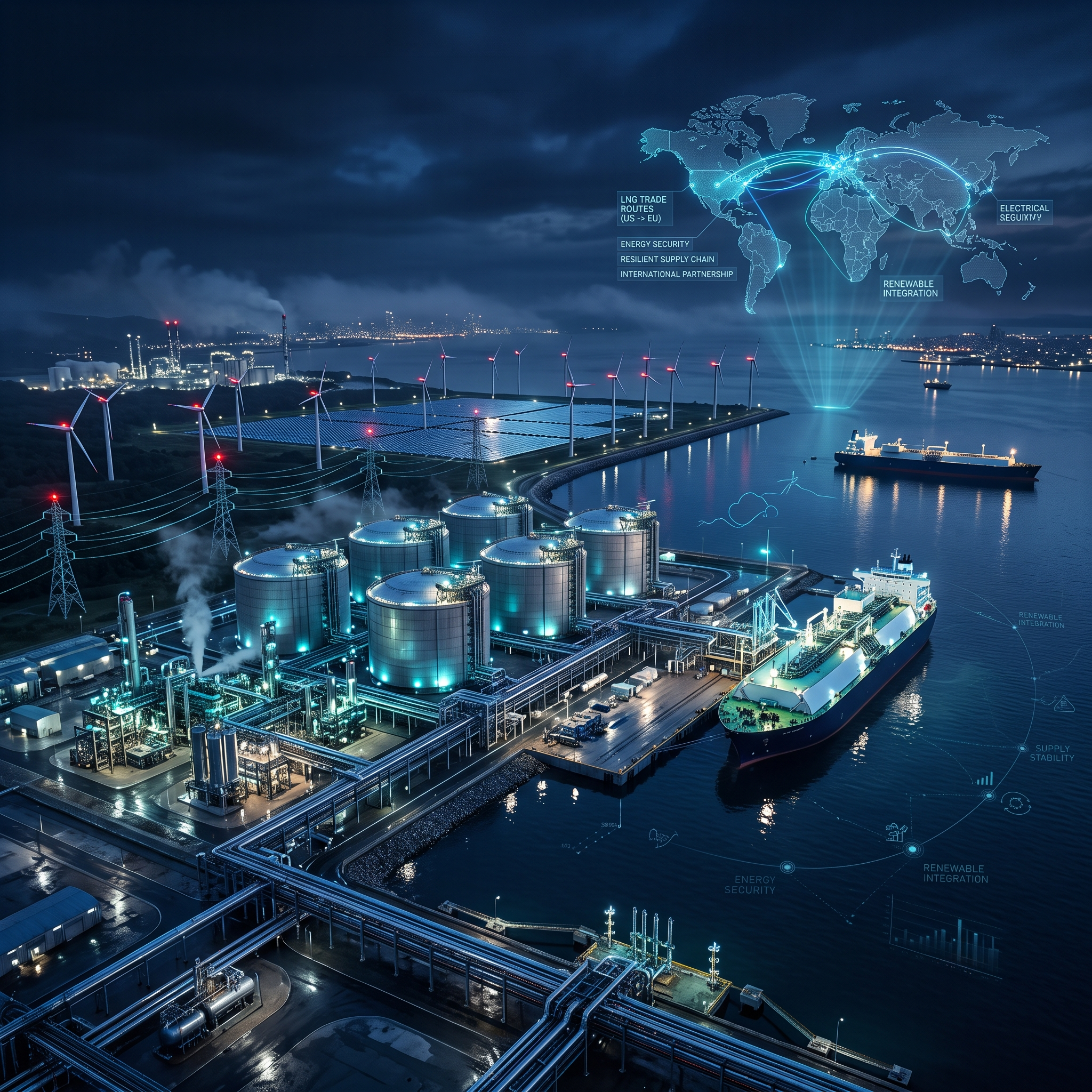
Although the long-term transition to low-carbon energy continues, the roundtable reinforced that LNG remains an important part of Europe’s energy security strategy.
For Europe, Canadian LNG offers more than additional supply. It provides access to energy from a trusted trading partner, helping reduce exposure to regions where geopolitical events can quickly affect global markets.
Business-to-business meetings between Canadian LNG developers and European buyers also highlighted a practical objective behind the discussions: turning political cooperation into long-term commercial partnerships.
Clean Energy Requires Resilient Infrastructure
The conversation extended beyond fuels.
Participants also focused on the infrastructure needed to support the next phase of the energy transition, including electricity networks, clean energy technologies and the supply chains that connect them.
Expanding renewable energy capacity alone is no longer enough. The systems that manufacture, transport and integrate those technologies have become equally important to long-term energy resilience.
As governments accelerate investment in cleaner energy, ensuring those supply chains remain reliable is becoming a strategic priority.
Investment Confidence Depends on Stability
Large-scale energy infrastructure requires long investment horizons.
Stable policy, predictable regulation and trusted international partnerships give businesses greater confidence to invest in projects that will operate for decades.
That is increasingly becoming a competitive advantage for countries seeking to attract long-term capital.
What This Means for Industry Leaders
The EU-Canada discussions reflect a broader change taking place across global energy markets.
Energy security is no longer defined solely by domestic production or strategic reserves. It increasingly depends on trusted partnerships, diversified supply chains and infrastructure that can continue operating during periods of geopolitical uncertainty.
For energy companies, investors and policymakers, resilience is becoming just as important as capacity.
The countries that build reliable partnerships alongside reliable infrastructure are likely to be better positioned to navigate the next decade of energy transition and global market volatility.