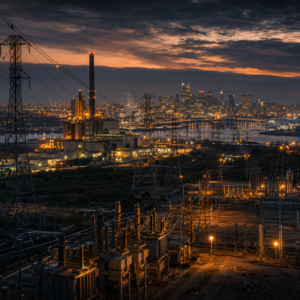

The US Department of Energy is expanding its approach to energy infrastructure security through closer coordination between government, national laboratories and private-sector operators.
DOE’s Office of Cybersecurity, Energy Security, and Emergency Response and the National Laboratory of the Rockies brought together more than 100 government and industry representatives for an Energy Threat Analysis Center strategy summit. The event also marked the groundbreaking of a new Energy Resilience Building that will house the ETAC.
The ETAC is structured as a public-private partnership focused on identifying, analyzing and mitigating threats affecting critical energy infrastructure.
Security Extends Beyond Cyber Systems
Energy infrastructure depends on interconnected physical and digital systems.
Power generation, transmission, fuel infrastructure, control systems, communications and third-party suppliers can all affect operational continuity.
This means security planning increasingly needs to account for different categories of risk rather than treating cybersecurity, physical security and supply-chain exposure as separate issues.
Information Sharing Has a Direct Operational Role
The ETAC model is intended to combine government information with data and operational context from energy companies.
For infrastructure operators, access to better threat information can support decisions around:
● Asset protection
● Incident response
● Operational planning
● Supply-chain exposure
● Cybersecurity
● Physical infrastructure
● Emergency preparedness
The value lies in connecting information about a threat with the infrastructure and operating conditions that could be affected.
Implications for Energy Companies
The initiative is relevant to utilities, energy producers, pipeline operators and other companies responsible for critical infrastructure.
As infrastructure becomes more interconnected, security decisions increasingly intersect with engineering, operations, procurement and investment.
For senior executives, this raises practical questions around which assets require additional protection, how quickly incidents can be identified, where external dependencies exist and whether response procedures can be executed across internal teams and third-party partners.
The DOE’s latest initiative indicates that energy infrastructure security is increasingly being approached as a shared operational responsibility between government and industry, rather than as an issue confined to individual security functions.