The case for hydrogen is changing.
Decarbonization remains a major reason for investing in hydrogen, but it is no longer the only argument carrying projects forward. Energy security, industrial resilience and supply diversification are becoming equally important as governments and companies reassess the vulnerability of global energy and commodity supply chains.
The shift is reflected in the latest Global Hydrogen Compass 2026 from the Hydrogen Council and McKinsey & Company. Global low-carbon hydrogen project capacity has reached 6.9 million metric tons per year, while committed investment has climbed to approximately $130 billion.
More significantly, operational capacity has increased 70% to around 1.7 million mt/y and is expected to reach approximately 3.8 million mt/y by 2027 as projects currently under construction come online.
For an industry that has spent years discussing hydrogen largely through the lens of emissions reduction, the new investment logic is more immediate: hydrogen can also be an energy-security asset.
Energy Security Is Changing the Hydrogen Investment Case
The Hydrogen Council says more than 60% of committed investment is now in regions where energy security and industrial growth are as important as, or more important than, decarbonization as investment drivers.
That matters because the strongest argument for hydrogen may not always be replacing one fuel with another.
It can be about reducing exposure to a concentrated supply chain.
Countries that depend heavily on imported fuels, feedstocks or industrial commodities are discovering that a disruption at a single chokepoint can quickly become a much wider economic problem. Hydrogen and its derivatives offer another option: producing more of the energy and industrial inputs a country needs closer to where they are consumed.
The Strait of Hormuz illustrates the problem.
The waterway remains one of the world’s most important energy corridors, carrying a substantial share of global seaborne oil trade as well as LNG and fertilizer-related flows. Recent disruption in the region has therefore exposed a vulnerability that goes beyond the price of crude or natural gas.
For hydrogen markets, the lesson is straightforward.
The resilience of an energy system depends not only on how much supply exists, but on how concentrated its routes are.
India’s Ammonia Exposure Puts the Issue in Sharper Focus
India provides one of the clearest examples of how hydrogen security can intersect with food and industrial security.
According to the Hydrogen Council, approximately 80% of India’s ammonia demand depends on imported ammonia or natural gas, with around 40% of that exposure passing through the Strait of Hormuz.
That creates a connection between an international shipping disruption and domestic agricultural supply.
Ammonia is essential to fertilizer production, meaning supply interruptions can ultimately affect far more than the energy sector. The vulnerability extends into food production, industrial costs and broader economic stability.
This is strengthening the case for domestic renewable hydrogen and ammonia production.
India has already been moving toward renewable ammonia procurement and domestic production as it seeks to reduce exposure to volatile international supply chains. The strategic objective is not necessarily to eliminate imports altogether. It is to create enough domestic capacity and alternative sourcing options that a disruption in one region does not immediately become a national supply problem.
That is a different way of thinking about hydrogen.
It is not simply a molecule for decarbonizing hard-to-abate sectors. It can become strategic domestic infrastructure.
Investment Is Concentrating Where Hydrogen Solves Multiple Problems
The global investment picture also shows that there is no single hydrogen model emerging.
China continues to lead in renewable hydrogen, accounting for more than half of committed global capacity and the majority of new operational renewable capacity added since 2025. The country has approximately $44.5 billion in committed hydrogen investment, with roughly $12 billion advancing to final investment decision over the past year, according to the Hydrogen Council.
Europe remains the second-largest market by committed investment and leads in project numbers, with investment increasing 35% year over year. Policy support, including the implementation of RED III transport targets, continues to support demand.
The United States presents a different picture, leading in low-carbon hydrogen deployment and accounting for more than 75% of committed low-carbon capacity globally, according to the report.
Japan and South Korea face another set of constraints. Both have limited domestic production potential but significant decarbonization ambitions and strong concerns about energy security. Their hydrogen strategies therefore place considerable emphasis on distribution, imports and end-use applications.
These differences point toward a more complicated hydrogen economy.
Some markets will prioritize domestic production.
Others will depend on imported molecules.
Many will require both.
The Next Challenge Is Building the Hydrogen System Around the Molecule
The industry’s transition from hydrogen ambition to hydrogen execution brings another issue into focus: producing hydrogen is only one part of the supply chain.
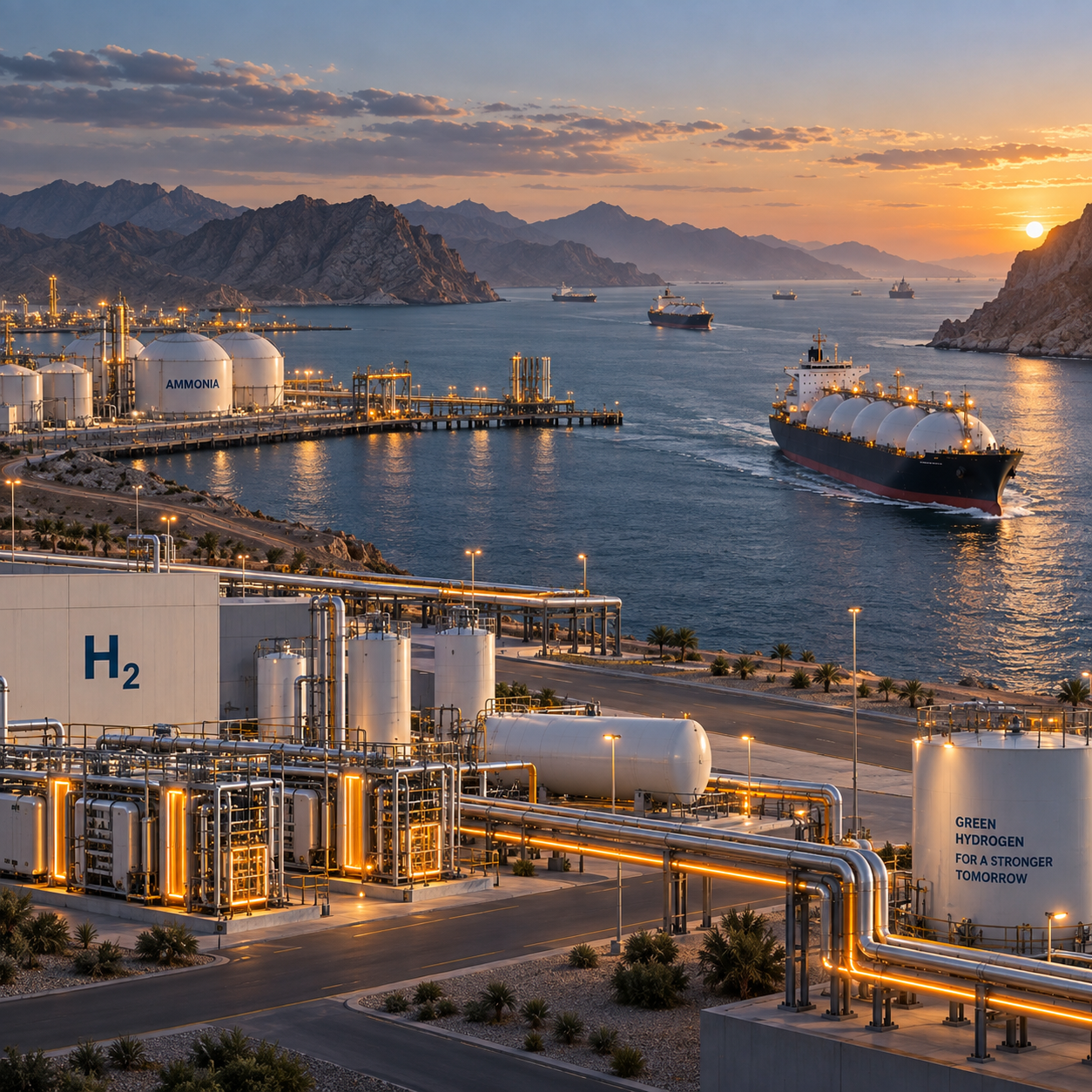
Projects also need storage, transportation, conversion, terminals, pipelines, offtake infrastructure and reliable customers.
That is particularly important for hydrogen derivatives such as ammonia, methanol and sustainable fuels, where international trade may become an important part of the emerging market.
For import-dependent economies, securing supply may therefore require investment across the entire chain rather than simply signing long-term purchase agreements.
For producing countries, meanwhile, the opportunity is to build export infrastructure while developing domestic demand that can support projects when international markets are volatile.
This creates a different infrastructure question from the one facing renewable power.
A wind or solar project can be connected to a grid and begin delivering electricity. Hydrogen requires an interconnected ecosystem around production, conversion, transportation and consumption.
That makes execution critical.
Policy Stability May Matter More Than Another New Target
The Hydrogen Council’s conclusion is particularly relevant for investors and developers: stable execution of existing policy may be more important than creating new regulatory frameworks.
That is a significant shift in emphasis.
The hydrogen industry does not necessarily lack ambitions, targets or proposed projects. It needs projects to move through development, financing, construction and operation.
The next phase will therefore be judged less by the size of the announced pipeline and more by how much infrastructure actually gets built.
For governments, that means providing predictable rules and demand signals.
For developers, it means proving that projects can operate at competitive costs.
For industrial buyers, it means creating durable offtake.
And for investors, it means determining which projects are supported by genuine demand rather than policy ambition alone.
Hydrogen’s Role in Energy Security Is Becoming Harder to Ignore
The geopolitical shocks of recent years have changed the way energy systems are evaluated.
Lowest-cost supply remains important, but it is no longer the only measure of a resilient energy system. Geographic concentration, shipping routes, import dependence and access to critical inputs now carry a much greater strategic weight.
Hydrogen will not eliminate those vulnerabilities by itself.
It may, however, give governments and industries another tool for reducing them.
The strongest hydrogen projects of the next decade may therefore be those that solve several problems simultaneously: lowering emissions, strengthening domestic industry, diversifying supply and protecting critical sectors from external shocks.
That makes hydrogen’s future about more than the energy transition.
It is increasingly about who controls the molecules, infrastructure and supply chains that keep an economy running.